AI Search · Visibility Metrics · Animink
How do you measure success when customers can discover your business without visiting your website?
For years, businesses have measured their online success using familiar numbers: Google rankings, organic website traffic, click-through rates, and conversions. These metrics still matter, but the way people search for information is changing, and businesses need a broader understanding of what online visibility looks like today.
With AI-powered search tools such as ChatGPT, Google AI Overviews, Gemini, and Microsoft Copilot becoming part of the customer research process, appearing at the top of traditional search results is no longer the only way a business can gain exposure. AI platforms may mention a company, summarize its services, or cite its website directly within an answer, sometimes without the user ever clicking through to the site.
This creates an important question for business owners: How do you measure success when customers can discover your business without visiting your website?
At Animink, we believe understanding AI search performance requires looking beyond rankings and traffic alone. By tracking how frequently a business appears in AI-generated answers, which pages are being referenced, and whether that exposure leads to meaningful customer engagement, companies can develop a clearer picture of their digital presence.
Jump To Section
The Bigger Picture
Why Traditional SEO Metrics Only Tell Part of the Story
Traditional search engine optimization has typically focused on helping websites rank for relevant keywords and attracting visitors through search results. Rankings, impressions, organic sessions, and conversions remain valuable indicators of how well a website performs.
However, AI-powered search introduces additional ways for customers to discover businesses.
Someone researching a service might ask ChatGPT for recommendations, review an AI Overview in Google Search, or use Copilot to compare companies. These platforms may provide answers that mention specific businesses or reference their websites without requiring users to open each source.
As a result, a business could receive valuable exposure even when that interaction doesn’t immediately generate a website visit. Conversely, a company might maintain strong traditional rankings while appearing infrequently in AI-generated recommendations.
This is why modern AI search optimization should include metrics that measure both visibility within AI responses and the business results that follow.
Metric 1
1. AI Visibility Rate: How Often Does Your Business Appear?
One of the most useful metrics for evaluating AI search performance is AI visibility rate.
This measures how often your business appears in responses to a defined collection of relevant prompts or questions.
For example, a Charlotte-based service company might test questions such as “Which companies provide this service in Charlotte?” or “What should I look for when choosing a local provider?”
If the business appears in 18 out of 60 tested responses, its AI visibility rate would be 30%.
The key is consistency. Businesses should evaluate a representative group of prompts related to their services, geographic markets, and customer needs. Testing the same questions periodically can reveal whether visibility is improving or declining.
Because AI responses can vary between sessions, users, and platforms, visibility rates should be treated as directional measurements rather than exact rankings.
Metric 2
2. Linked Citations and Unlinked Brand Mentions
Not every appearance in an AI-generated answer looks the same.
Sometimes an AI platform includes a clickable link to a company’s website. Other times, it mentions the business by name without providing a direct link.
Both forms of exposure are worth tracking, but they serve different purposes.
Linked citations can help users verify information, explore services, and visit the business’s website.
Unlinked brand mentions may still introduce the company to potential customers and influence which businesses they consider.
For example, an AI response might recommend three local companies by name but link to only one company’s website. Tracking citations and mentions separately helps businesses understand whether they’re simply being discussed or also receiving opportunities to attract visitors.
A strong AI visibility strategy considers both forms of exposure rather than focusing exclusively on website clicks.
Metric 3
3. Number of Website Pages Cited by AI Platforms
Another valuable metric is the number of individual website pages that AI platforms reference.
If AI-generated answers consistently cite only a company’s homepage, it may suggest that its deeper service pages, educational articles, or other resources aren’t being surfaced as frequently.
On the other hand, citations across multiple relevant pages may indicate that AI platforms are finding useful information throughout the website.
Businesses should pay attention to which pages receive citations and what those pages have in common.
Are detailed service pages being referenced?
Do helpful blog articles appear in answers to customer questions?
Are location-specific pages receiving attention for regional searches?
For companies investing in web design Charlotte services, this information can also help guide website improvements. Clear navigation, descriptive headings, well-organized content, and technically accessible pages make it easier for search technologies to discover and interpret relevant information.
The goal isn’t simply to increase the number of cited pages. It’s to make sure the pages that best answer customer questions are accessible, informative, and relevant.
Metric 4
4. Grounding Queries and Topics That Generate Citations
Understanding which questions lead AI platforms to reference your website can be just as important as knowing how often citations occur.
Some AI search reporting tools provide information about the queries or topics associated with cited content. In AI systems, grounding refers to using retrieved information or external sources to support a generated response.
For example, a business may discover that its website is frequently referenced for general educational questions but rarely appears when users ask for specific service providers.
That distinction provides valuable direction for future content development.
Businesses can use available query and topic data to identify subjects where they already have visibility, discover gaps in their content, and better understand the types of information AI platforms associate with their websites.
It’s important to recognize that reporting capabilities differ between platforms. Not every AI service provides detailed information about the prompts, sources, or retrieval processes behind its answers.
Metric 6
6. Website Traffic From AI Platforms
While AI-generated answers don’t always lead to clicks, some users do visit websites directly from AI platforms.
Tracking referral traffic from sources such as ChatGPT, Copilot, Gemini, and other AI services can help businesses understand how these tools contribute to website discovery.
Analytics platforms may identify some of these visits through referral information, allowing businesses to examine which pages users visit, how they engage with the website, and whether they complete important actions.
There are limitations, however. Not every AI-assisted visit is clearly labeled, and some traffic may appear as direct or another channel depending on how the user reaches the website.
For this reason, AI referral traffic is best viewed as one piece of a larger measurement strategy rather than a complete count of everyone who discovered a business through AI.
Metric 7
7. Leads and Conversions From AI-Assisted Customer Journeys
Visibility is valuable, but businesses ultimately need to understand whether their digital marketing efforts are helping generate results.
That means looking beyond impressions, mentions, and citations to examine conversions.
Depending on the business, conversions may include contact form submissions, phone calls, appointment requests, quote inquiries, purchases, or other meaningful customer actions.
For example, a small business might receive relatively few visits from AI platforms, but those visitors could be highly interested in its services. If a meaningful percentage of those visitors submit inquiries, that traffic may be especially valuable.
Tracking conversions associated with identifiable AI referrals can help businesses better understand their return on marketing efforts.
However, attribution isn’t always straightforward. A customer may discover a company through an AI recommendation, visit its website later through Google, and eventually make contact directly. In that situation, traditional analytics may not capture the original AI interaction.
Businesses can supplement analytics with customer intake questions, CRM information, and other attribution methods to better understand how AI influences purchasing decisions.
Metric 8
8. Changes in AI Visibility Over Time
A single AI visibility report provides a snapshot, but ongoing measurement reveals trends.
Because AI platforms continually evolve, businesses should monitor changes in their visibility across a consistent group of prompts, services, and platforms.
Monthly or quarterly comparisons can help identify whether a company’s mentions, citations, referral traffic, and conversions are increasing or decreasing.
It’s also helpful to document significant website updates, new content, service expansions, and other marketing activities alongside these measurements.
This allows businesses to look for potential relationships between their optimization efforts and changes in AI search performance, without assuming that every increase or decrease was caused by a particular update.
Putting Metrics to Work
Turning AI Search Metrics Into Better Business Decisions
For small and mid-sized businesses, measuring AI visibility doesn’t need to involve an overwhelming collection of dashboards and reports.
A practical starting point is to establish a baseline using a manageable set of customer-focused prompts, document brand mentions and citations, identify frequently referenced pages, and track available AI referral traffic and conversions.
From there, businesses can prioritize improvements based on what the data reveals.
At Animink, we understand that effective digital marketing is about more than collecting numbers. It’s about using meaningful information to improve website content, strengthen online visibility, and create better experiences for potential customers.
Our approach to AI search optimization, website development, and web design Charlotte services focuses on building a strong digital foundation while helping businesses adapt to changing search behavior.
The Takeaway
Looking Beyond Rankings to Measure What Matters
Traditional search rankings aren’t going away, and organic website traffic will continue to play an important role in evaluating digital marketing success. But as AI-powered platforms become another way customers discover businesses, companies need to expand how they measure online visibility.
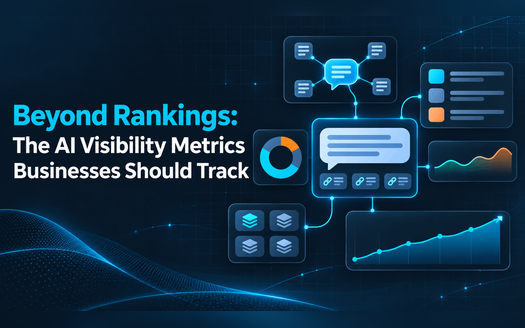
Tracking AI visibility rates, brand mentions, citations, cited pages, referral traffic, and conversions provides a more complete understanding of how a business appears throughout the modern customer journey.
The most useful strategy combines traditional SEO measurements with emerging AI search metrics, creating a clearer picture of both discoverability and business impact.
FAQ
Frequently Asked Questions
What is AI search performance?
AI search performance refers to how visible and effective a business or website is within AI-powered search and answer platforms. Common measurements include brand mentions, linked citations, visibility across relevant prompts, AI referral traffic, and conversions associated with AI-assisted customer journeys.
How can businesses measure their visibility in ChatGPT and other AI platforms?
Businesses can test a consistent collection of relevant questions across AI platforms, record how often their company appears, track available citations, and monitor identifiable referral traffic in website analytics. Some webmaster and third-party tools also provide AI-related performance data, although reporting capabilities vary by platform.
What is the difference between AI visibility rate and citation share?
AI visibility rate measures how frequently a business appears within a defined set of AI-generated responses. Citation share measures the percentage of observed citations attributed to a particular website compared with other cited sources in the same sample. Together, these metrics provide insight into brand exposure and how frequently a website is referenced.
Can Google Analytics track website traffic from AI search?
Google Analytics 4 can identify some website visits originating from AI platforms when referral information is available. Businesses can use traffic acquisition reports or custom reporting to examine these visits and associated conversions. However, not all AI-assisted visits can be identified, so analytics may underestimate AI’s overall influence on customer discovery.
Why should small businesses track AI search optimization metrics?
Small businesses can use AI search metrics to understand whether potential customers are discovering their services through emerging search platforms. Tracking mentions, citations, relevant prompts, and identifiable conversions helps businesses prioritize content improvements and marketing investments without relying solely on traditional rankings or website traffic.
Want to better understand how your business performs in AI-powered search?
Connect with Animink to explore how a stronger website, thoughtful AI search optimization, and ongoing performance evaluation can help support your digital marketing goals.