
AI-Ready Web Design · AI Search Optimization · Animink
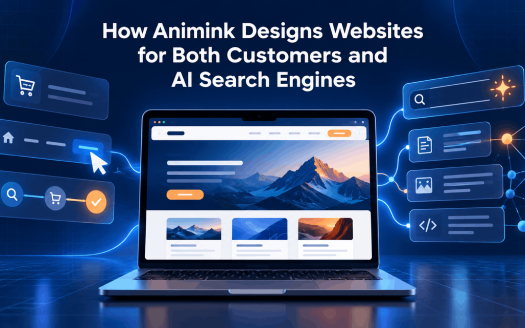
Your website now has two audiences: the customers who visit it and the AI search engines that interpret it. Here is how to design for both.
Jump To Section
For years, good web design has focused on creating a positive experience for the people who visit a website. Pages should load quickly, navigation should make sense, information should be easy to find, and visitors should be able to take the next step without unnecessary frustration.
Those fundamentals still matter. But today, businesses have another audience to consider: AI-powered search engines and answer platforms.
Search is changing as people increasingly use conversational queries and AI-generated search results to find businesses, compare services, research products, and answer questions. That means a modern website needs to do more than look good. It needs to communicate clearly with both human visitors and the systems interpreting its content.
At Animink, our approach to AI-ready web design brings these priorities together. We build websites around real customer needs while creating clear, organized digital experiences that traditional search engines and emerging AI search technologies can more easily understand.
Customer First
Start With the Customer Experience
AI search optimization should never come at the expense of the person visiting your website. In fact, many of the qualities that make a website easier for AI systems to understand also make it easier for customers to use.
Think about what happens when someone lands on a business website. They usually have a question or goal in mind. They may want to know what services the company offers, whether it serves their location, how much experience the company has, or how to get in touch.
A well-designed website makes those answers easy to find.
Clear navigation, descriptive page headings, logical content organization, readable copy, and visible calls to action all help visitors move through a site naturally. Rather than overwhelming users with large blocks of information or sending them through multiple pages to find a simple answer, an effective website anticipates what visitors are looking for and creates a straightforward path to it.
This user-first philosophy remains at the heart of our web design in Charlotte approach.
Structure
Creating a Website Structure Search Engines Can Understand
A clear website structure benefits more than human visitors. Search engines and AI systems also need to understand how pages and topics relate.
Confusing navigation, vague headings, thin content, or important information buried deep within pages can make that job harder. By contrast, these elements provide valuable context:
Titles that say exactly what each page covers, for people and machines alike.
A clean hierarchy that shows how topics and subtopics fit together.
One page per service, with enough depth to answer real questions.
Connections between related pages that guide visitors and reinforce context.
For example, instead of placing every service a business offers on one general page, it may make sense to create dedicated pages that explain individual services in greater detail. Supporting content such as FAQs, guides, case studies, and blog articles can then answer more specific customer questions and provide additional context around the company’s expertise.
This organization creates a website that is easier to explore while giving search technologies clearer signals about what the business does and what information may be relevant to a particular query.
Content
Making Content Ready for Conversational and AI Search
Traditional searches often consisted of a few keywords. Someone might have searched for “web design Charlotte” or “Charlotte website company.” With conversational and AI-powered search, users can ask much more detailed questions, such as:
What should a small business look for when hiring a web design company in Charlotte?
Website content needs to evolve as the way people search does.
Effective AI search optimization includes creating useful content that addresses real questions directly and in natural language. Pages should clearly identify services, locations, expertise, and other important business information rather than relying on vague marketing statements.
Well-written headings and FAQs can be particularly valuable because they mirror the question-and-answer format people frequently use with AI search tools. The goal isn’t to write content for robots. It’s to provide complete, understandable information that is useful enough for people while being structured clearly enough for search technologies to interpret.
Performance
Performance Is Part of the Experience
Even excellent content can lose its impact when a website is frustratingly slow.
Page speed and mobile usability remain essential parts of modern web development. Large images, unnecessary scripts, outdated technology, or poor hosting decisions can make pages sluggish and send visitors looking elsewhere.
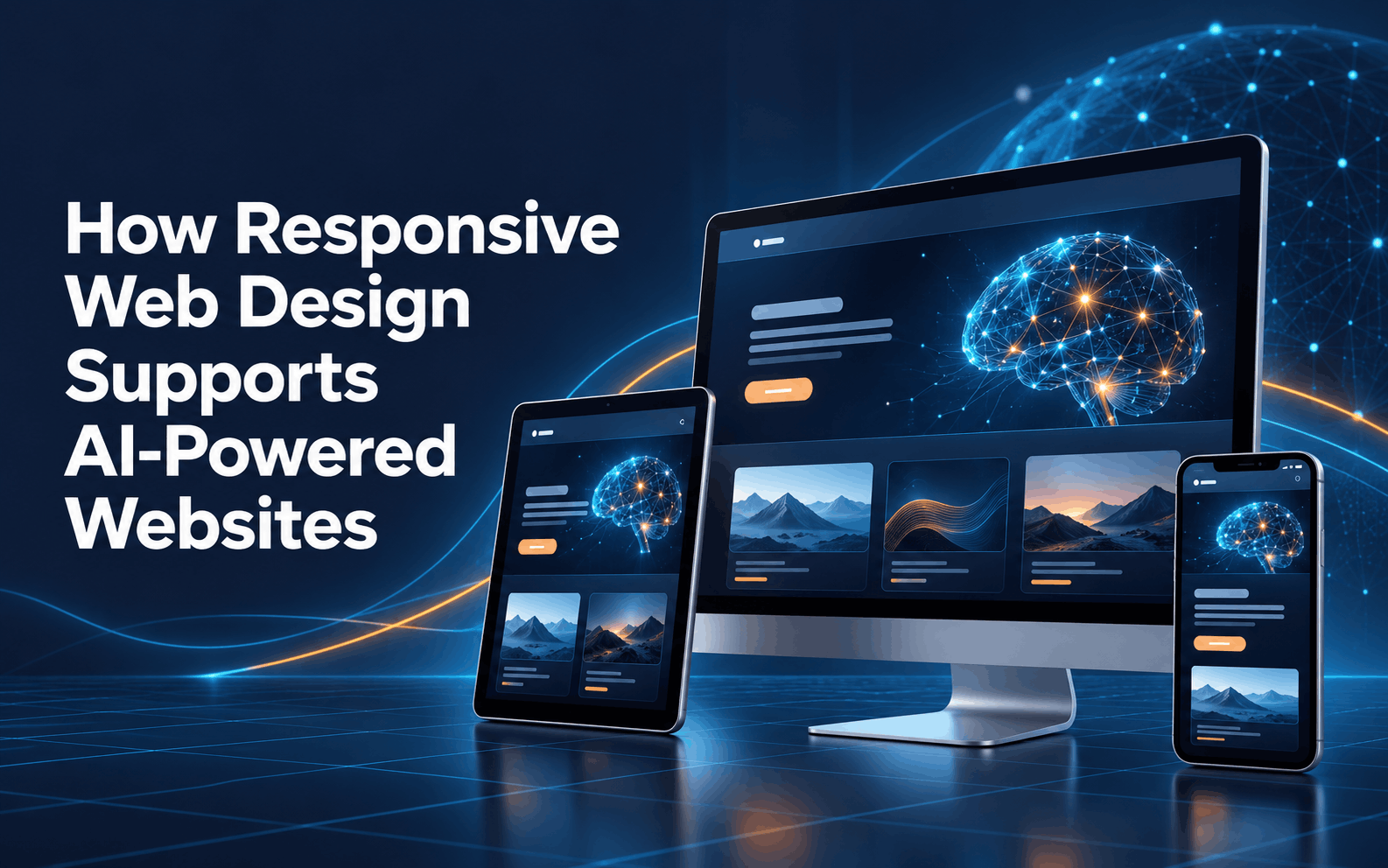
Animink focuses on clean development and strong website performance so users can reach the information they need without unnecessary delays. Responsive design is equally important. Customers may discover a business from a phone, tablet, laptop, or desktop computer, and the experience should feel natural regardless of screen size.
A technically sound website also provides a stronger foundation for ongoing SEO and AI search strategies. Great content and strong technology work best when they’re developed together rather than treated as separate projects.
Small Business
Why AI-Ready Web Design Matters for Small and Mid-Sized Businesses
For small and medium-sized businesses, adapting to search changes can feel daunting. Most SMBs don’t have the marketing resources of national brands, and they certainly don’t have time to rebuild their strategy every time a new technology emerges.
The good news is that becoming AI-ready doesn’t mean chasing every new trend. It starts with getting the fundamentals right.
A local or regional business can strengthen its digital presence by clearly explaining what it does, where it operates, who it serves, and why customers choose it. These building blocks all contribute to a stronger online presence:
For an SMB, this approach can also make a website work harder as a sales and marketing tool. Instead of functioning as little more than a digital brochure, the site becomes a resource that answers questions, introduces services, builds trust, and helps prospective customers decide what to do next.
The Big Picture
Designing for People and the Future of Search
The rise of AI-powered search doesn’t mean businesses need to abandon traditional SEO or completely rethink everything they know about web design. Instead, it reinforces something that has always been important: websites should provide useful information in a clear, accessible, well-organized way.
At Animink, we combine thoughtful design, clean development, strong performance, strategic content organization, and AI search optimization to create websites built for how customers search today and how search will continue to evolve.
Whether you’re a growing local company or an established mid-sized business, an AI-ready web design strategy can help ensure your website remains useful to the people who matter most, your customers, while making your business easier for search engines and AI-powered platforms to understand.
A website shouldn’t force businesses to choose between a great customer experience and stronger search visibility. When it’s designed correctly, it can support both.
FAQ
Frequently Asked Questions
AI-ready web design is an approach that creates a website for both human visitors and the search technologies that interpret online information. It combines user-friendly navigation, logical site structure, useful content, fast performance, mobile responsiveness, and other technical and content practices that help make a website easier to understand and navigate.
Traditional SEO and AI search optimization overlap significantly, but AI search places additional emphasis on clearly structured information, natural-language questions and answers, context, and content that can be easily interpreted when users make conversational queries. Businesses should generally view AI optimization as an evolution of a strong search strategy rather than a replacement for SEO.
Small businesses can benefit from preparing for AI-powered search, particularly as consumers use more conversational tools to research local companies, products, and services. Clear service descriptions, location information, FAQs, helpful educational content, and an organized website can make it easier for both customers and search technologies to understand the business.
Website performance is an important part of the overall user experience. Slow-loading pages can frustrate visitors, particularly on mobile devices, while a fast, responsive website makes it easier for customers to explore services and take action. Strong technical performance also supports a healthier foundation for search optimization.
An existing website doesn’t necessarily need to be replaced from scratch to prepare for changing search behavior. Depending on the site’s condition, improvements may include reorganizing content, strengthening service pages, improving navigation, addressing performance issues, adding helpful FAQs, and developing content around the questions prospective customers are actually asking. Animink can evaluate a company’s current digital presence and determine which improvements best support its goals.
Ready for a Website Built for Customers and AI Search?
Animink will evaluate your current site and recommend the improvements that best support your goals. Tell us about your project and let’s get started.