AI Visibility · Brand Audit · Animink
Platforms like ChatGPT, Google AI Overviews, Gemini, and Bing Copilot are changing how people research companies. But what are they actually saying about your business, and is that information accurate?
When someone searches for your business online, what do they find? For years, the answer depended largely on traditional search engine results, customer reviews, and the information displayed on your website. Today, there’s another important factor influencing how potential customers discover and evaluate businesses: artificial intelligence.
Platforms like ChatGPT, Google AI Overviews, Gemini, and Bing Copilot are changing how people research companies, compare services, and make purchasing decisions. Rather than scrolling through a list of websites, users can ask detailed questions and receive AI-generated responses that summarize information from multiple sources.
But here’s something many business owners haven’t considered: What are these AI platforms actually saying about your company, and is that information accurate?
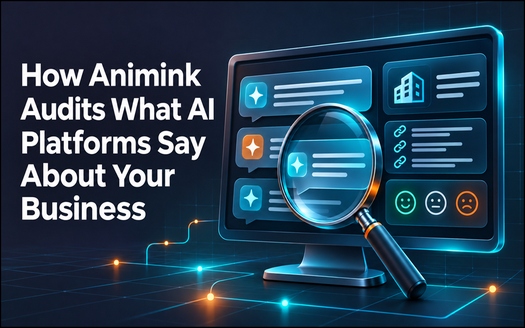
At Animink, an AI brand audit helps businesses understand how they are represented across AI-powered search experiences. By examining the information AI platforms provide, the sources they reference, and the gaps that may be affecting visibility, businesses can take meaningful steps toward building a stronger digital presence.
Jump To Section
The Stakes
Why Your Business’s AI Reputation Matters
Imagine a potential customer asking an AI assistant to recommend a company that provides a particular service in their area. The platform might respond with several recommendations, descriptions of each company’s specialties, and links to supporting information.
Now imagine your business isn’t mentioned, even though you offer exactly what that customer needs. Or perhaps your company appears in the response, but the description includes outdated services, incorrect locations, or incomplete information about your expertise.
These situations can create missed opportunities.
AI-generated answers may draw on business websites, online directories, reviews, articles, and other publicly available information. Different platforms use different systems to retrieve and interpret that information, meaning your business may be described differently depending on where and how someone searches.
An AI search audit helps uncover these differences. Instead of assuming that your website is communicating the right message, an audit examines how that message is actually being interpreted and presented.
Step 1
Evaluate How AI Platforms Describe Your Business
The first step in understanding your AI visibility is examining what major AI platforms say about your company.
Animink’s audit approach involves evaluating responses from platforms such as ChatGPT, Google AI Overviews, Gemini, and Bing Copilot to see how they describe a business’s services, locations, industry experience, and areas of expertise.
For example, does an AI platform correctly identify your primary services? Does it recognize the geographic areas you serve? Does it understand what makes your company different from competitors?
These details matter because potential customers may rely on AI-generated summaries to narrow their choices before ever visiting a company’s website.
It’s also important to recognize that AI responses aren’t always consistent. Answers can change based on the wording of a question, the information available to the platform, and updates to its underlying systems. That’s why reviewing multiple platforms and search scenarios provides a more useful picture than relying on a single result.
Step 2
Compare Branded and Service-Related Searches
Knowing what AI says when someone searches for your company by name is useful, but it only tells part of the story.
An effective AI brand audit also examines what happens when potential customers search for services without mentioning a particular business.
For example, a Charlotte-based company might appear when someone asks, “What services does this company provide?” but be absent when a user asks, “Which Charlotte businesses offer this service?” These two types of searches reveal different information.
Help determine whether AI platforms recognize your company and accurately understand its offerings.
Help evaluate whether your business appears in relevant discovery and recommendation scenarios.
Animink can also examine location-based questions, industry-specific searches, and comparison prompts to identify opportunities where stronger content or clearer business information may improve discoverability.
For small and mid-sized businesses, this distinction is especially important. Many potential customers don’t begin their search knowing which company they want to hire. They begin by describing a problem, service, or need.
Step 3
Identify Incorrect, Outdated, or Missing Information
AI-generated answers aren’t always accurate. A platform may reference an old business listing, misunderstand a service description, or overlook information that is clearly important to your company.
During an AI search audit, these inconsistencies can be documented and compared against verified business information. Common issues may include:
Incorrect service areas
Outdated contact details
Missing services
Inaccurate descriptions of company expertise
Confusion between businesses with similar names
Sometimes the issue isn’t that AI is presenting incorrect information. Instead, it may simply lack enough reliable context to provide a complete answer.
For example, a business might have expanded its services several years ago but never updated its website to explain those offerings in detail. If other online sources also contain limited information, AI platforms may continue associating the company primarily with its older services.
Identifying these gaps gives businesses a starting point for improving how their brand is represented online.
Step 4
Review Website Content, Schema, and Business Profiles
Once potential visibility issues have been identified, the next step is investigating the information AI platforms may be using.
Your website remains one of the most important places to establish accurate, authoritative information about your business. Clear service pages, descriptive headings, detailed company information, and helpful FAQs can make it easier for both traditional search engines and AI-powered systems to understand what you offer.
Structured data, often called schema markup, can provide additional machine-readable context about a company, its services, locations, and other relevant details. Although schema doesn’t guarantee inclusion in AI-generated responses, appropriate implementation can support clearer interpretation of website content.
Animink’s audit process also considers information beyond the website itself, including business profiles, relevant directories, customer reviews, and third-party mentions.
Consistency matters. If your website identifies one primary location while several directories list an outdated address, that conflicting information can create confusion for customers and search technologies alike.
For small and medium-sized businesses without large marketing departments, addressing these foundational issues can be a practical and manageable first step toward improving online visibility.
Step 5
Examine Which Sources AI Platforms Reference
One of the most valuable parts of an AI visibility assessment is understanding where AI-generated answers are getting their information.
When platforms provide citations or source links, an audit can examine which websites, articles, business profiles, and other resources are being referenced.
Is your company’s own website being cited? Are competitors appearing more frequently in relevant responses? Are industry directories or third-party articles influencing how your business is described?
These findings can reveal opportunities to strengthen your digital presence.
For instance, if AI responses consistently reference third-party directories rather than your website, it may be worth evaluating whether your service pages provide enough detailed, useful information. If competitors are frequently mentioned in connection with a particular service, reviewing their content and online authority may help identify areas where your business could provide more comprehensive information.
Not every AI response includes citations, and a cited page doesn’t necessarily reveal every source that influenced an answer. However, reviewing available references can still provide valuable insight into the information AI platforms surface.
Step 6
Develop a Practical Plan to Improve AI Visibility
An audit is most useful when it leads to action.
After evaluating AI responses, website content, business listings, and available source information, Animink can help identify priorities for improving brand clarity and online authority.
These recommendations may include updating outdated service descriptions, creating dedicated pages for important offerings, improving location information, implementing appropriate schema markup, expanding helpful FAQs, or strengthening relevant third-party business profiles.
This process is closely connected to generative engine optimization (GEO), which focuses on making information easier for AI-powered search and answer systems to discover, understand, and potentially reference.
GEO doesn’t replace traditional search engine optimization. Instead, it builds on many of the same fundamentals, including useful content, technical accessibility, clear website structure, and credible information.
The goal isn’t to manipulate AI platforms into recommending a business. It’s to make accurate, relevant information about that business easier to find and understand.
The Payoff
Why AI Visibility Services Matter for Growing Businesses
For small and mid-sized companies, every opportunity to connect with a potential customer matters. While larger competitors may have extensive marketing budgets and established online authority, smaller businesses can still strengthen their presence by focusing on accuracy, relevance, and helpful content.
Professional AI visibility services can help business owners understand where they stand without requiring them to become experts in every emerging search platform.
Rather than investing in changes based on assumptions, businesses can use audit findings to prioritize improvements that support both AI discoverability and the overall customer experience.
An AI brand audit also provides a useful starting point for ongoing evaluation. As services change, competitors evolve, and AI platforms update their systems, periodically reviewing how your company appears can help identify new opportunities or inconsistencies.
Your Next Move
Take Control of How Your Business Is Represented Online
AI-powered search is becoming another important part of how customers discover businesses, evaluate options, and make decisions. While companies can’t directly control every answer an AI platform generates, they can take steps to improve the quality, consistency, and accessibility of the information available about them.
At Animink, we help businesses approach these changes strategically through website development, digital marketing expertise, and AI visibility services designed to support a stronger online presence.
Whether you’re a small local business or a growing mid-sized company, understanding what AI platforms say about your brand is an important first step toward making sure potential customers receive a clearer, more accurate picture of what you offer.
Good To Know
Frequently Asked Questions
An AI brand audit evaluates how artificial intelligence platforms describe, reference, and potentially recommend a business. It examines responses from platforms such as ChatGPT, Google AI Overviews, Gemini, and Bing Copilot to identify inaccurate information, missing services, inconsistent brand descriptions, and opportunities to improve visibility.
A traditional SEO audit typically focuses on factors such as website performance, technical issues, keywords, content, backlinks, and search engine rankings. An AI search audit examines how AI-powered platforms interpret and present information about a business, including the accuracy of generated responses, brand mentions, and available citations. Both approaches can work together to support a stronger digital presence.
Businesses cannot directly control every AI-generated response. However, they can improve the accuracy and consistency of their online information by maintaining updated website content, accurate business profiles, relevant structured data, and credible third-party references. These improvements can help AI systems access clearer information, although specific answers or recommendations are never guaranteed.
A quarterly review can be a useful starting point for many businesses, although the ideal frequency depends on the industry, competition, and how often business information changes. Additional reviews may be helpful after a website redesign, major service expansion, relocation, rebranding, or significant changes to AI search platforms.
Yes. Generative engine optimization can help small businesses make their services, expertise, and geographic relevance clearer to AI-powered search platforms. By improving website content, maintaining consistent business information, and answering common customer questions, smaller companies can strengthen their digital presence without needing the resources of a large enterprise. However, GEO improvements do not guarantee AI mentions, citations, or recommendations.
Ready to find out how AI sees your business?
Connect with Animink to explore how an AI search audit and a practical generative engine optimization strategy can help strengthen your digital visibility.