
There’s a moment in every online shopping experience that makes or breaks a sale.
A customer is browsing, maybe even excited about what they’ve found. They add items to their cart, start the checkout process…and then something interrupts the flow. A question pops up. Shipping costs seem unclear. The checkout process feels longer than expected. Or maybe life simply gets in the way. Whatever the reason, they leave. And more often than not, they don’t come back.
This is the reality of cart abandonment, and it’s one of the most persistent challenges in e-commerce. But thanks to advancements in AI chatbot development services and AI software development services, businesses now have a powerful way to keep those customers engaged and guide them all the way to purchase.
Turning Passive Browsing into Active Engagement

Traditionally, e-commerce websites have been passive environments. A user clicks through pages, reads product descriptions, and navigates the checkout process largely on their own. If they get stuck or have a question, their options are limited: search the FAQs, send an email, or leave the site altogether.
E-commerce chatbots change that dynamic entirely.
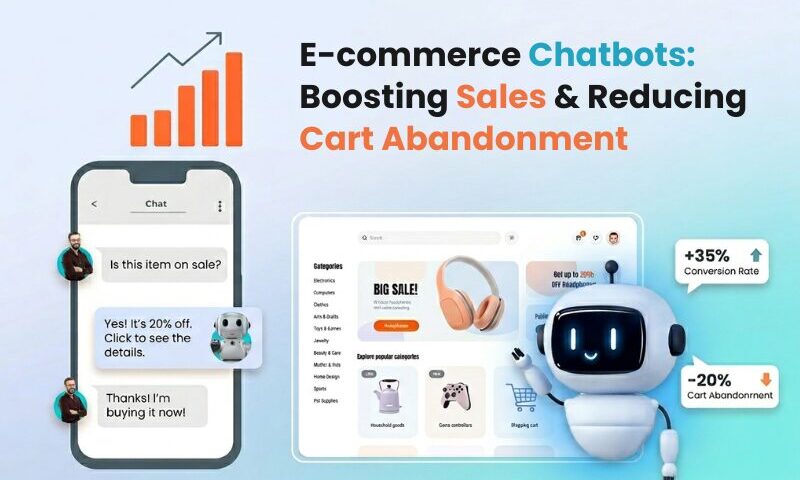
Instead of waiting for customers to figure things out, chatbots proactively engage them in real time. Using technologies like natural language processing (NLP), these bots can understand what a customer is asking, even if it’s phrased casually, and respond in a way that feels conversational rather than scripted.
It’s the difference between shopping alone and having a knowledgeable associate nearby who can step in exactly when needed.
Reducing Friction Where It Matters Most
 Cart abandonment often comes down to friction – small moments of uncertainty or inconvenience that disrupt the buying process. What makes chatbots so effective is their ability to identify and eliminate those friction points as they happen.
For example, a customer hesitating at checkout might be unsure about delivery timelines or return policies. A chatbot can instantly surface that information without forcing the user to leave the page. That immediate clarity can be the difference between completing a purchase and abandoning it.
In more advanced implementations, chatbots can even recognize behavioral signals, such as cursor movement toward the exit button or prolonged inactivity, and trigger helpful interventions. A simple message like, “Can I help you with anything before you go?” can re-engage a customer at a critical moment.
Personalization That Actually Feels Personal
 One of the most impactful aspects of modern chatbots is their ability to deliver personalized experiences at scale.
Through integrations with customer data platforms, chatbots can analyze browsing history, past purchases, and on-site behavior to tailor their responses. Instead of generic suggestions, customers receive recommendations that align with their preferences and intent.
For instance, if a returning customer has previously purchased athletic wear, the chatbot might highlight new arrivals in that category or suggest complementary products. This level of personalization not only improves the shopping experience but also increases average order value and overall conversion rates.
Behind the scenes, this is powered by sophisticated AI software development services that continuously refine the chatbot’s interpretation and response to user behavior.
Streamlining the Path to Purchase
 A common misconception is that chatbots are only useful for answering questions. In reality, they can play a much more active role in guiding customers through the entire buying journey.
From product discovery to checkout, chatbots can serve as a digital concierge. They can help users narrow down options, compare products, and even apply discount codes or select shipping methods.
This guided experience is especially valuable for complex product catalogs or industries where customers may need additional context before making a decision. By simplifying the process and reducing cognitive load, chatbots help keep customers focused and moving forward.
Supporting Customers Around the Clock
 Another key advantage of chatbots is their ability to provide consistent, 24/7 support.
In today’s on-demand world, customers expect immediate responses, regardless of the time of day. Relying solely on human support teams can make it difficult to meet those expectations, especially during peak traffic periods or outside business hours.
Chatbots fill that gap seamlessly. They can handle a high volume of inquiries simultaneously, ensuring that no customer is left waiting. For businesses, this not only improves customer satisfaction but also reduces the operational strain on support teams.
That said, the most effective implementations don’t replace human interaction. They complement it. When a conversation requires a more nuanced response, the chatbot can escalate the issue to a live agent, creating a hybrid support model that balances efficiency with personalization.
The Bigger Picture: Data-Driven Optimization
 One of the often-overlooked benefits of e-commerce chatbots is the data they generate.
Every interaction provides insight into customer behavior. What questions are being asked, where users are getting stuck, and what ultimately drives conversions. This data can be used to continuously refine both the chatbot’s performance and the overall user experience.
For example, if many users ask about shipping costs at checkout, it may indicate a need for clearer upfront pricing. If customers frequently abandon carts after viewing a specific product, it could signal an issue with product information or perceived value.
In this way, chatbots don’t just solve problems in real time. They help businesses identify and address systemic issues that impact sales.
Bringing It All Together
E-commerce is no longer just about having a great product. It’s about delivering a seamless, intuitive experience from the first click to the final purchase.
Chatbots, powered by advanced AI chatbot development services, are playing a central role in making that happen. By engaging customers in real time, reducing friction, and providing personalized support, they help turn moments of hesitation into opportunities for conversion.
And in a landscape where even small improvements in conversion rates can translate into significant revenue gains, that’s a competitive advantage worth investing in.
If you’re exploring ways to enhance your e-commerce experience and reduce cart abandonment, working with a trusted partner like Animink can help you build a solution that’s not only technically sound but strategically aligned with your business goals.
Because at the end of the day, the goal isn’t just to attract visitors – it’s to convert them. Contact us today.